Consulting & Reimplementation Available: This model was originally implemented in PLASIMO during my PhD. We can discuss how to implement it in another plasma simulation software upon request, or adapt your own model, add new chemistry, or create verification workflows to test it. Contact me to discuss.
Disclaimer: PLASIMO and COMSOL Multiphysics® are not affiliated with Deep Why and require the client to hold their own licenses.
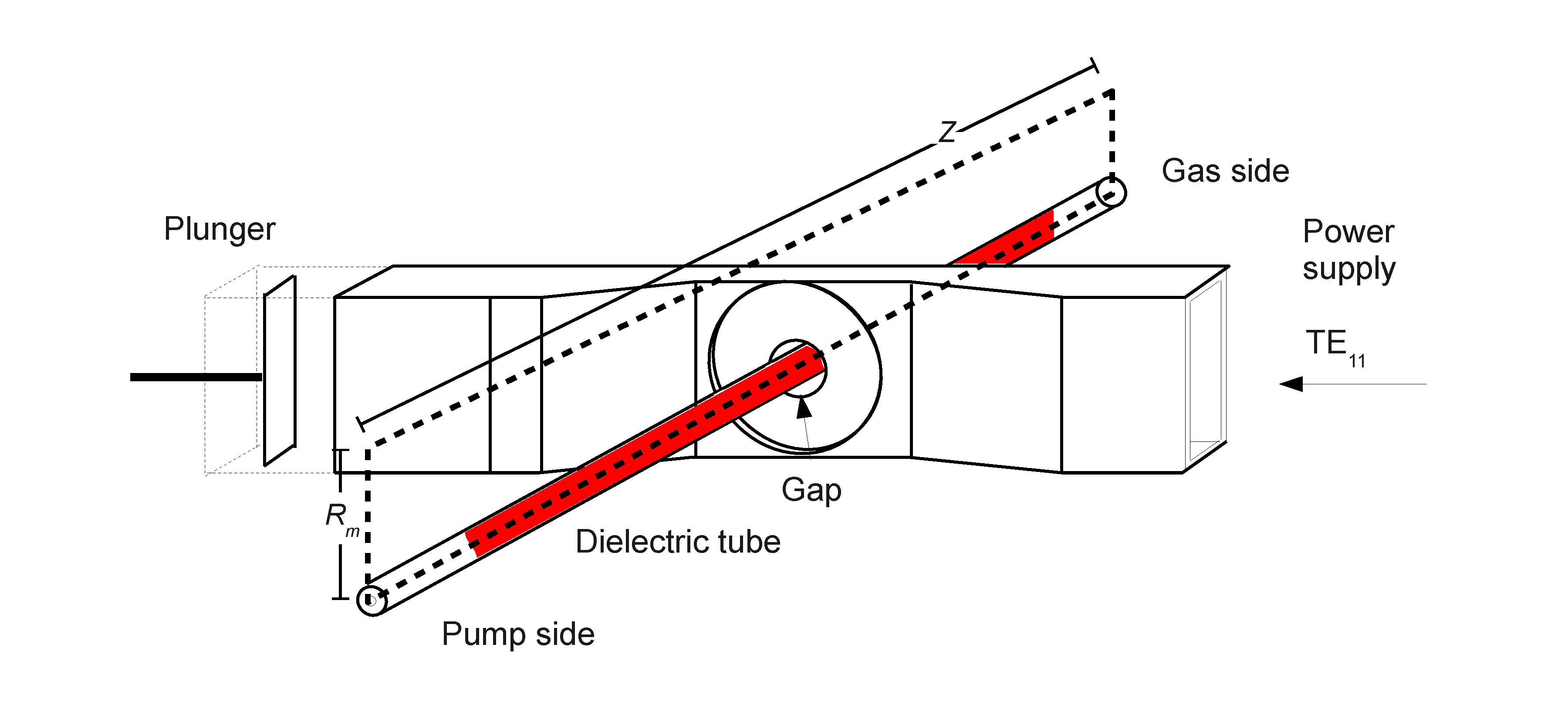
Surface-wave sustained discharges (SWDs) are efficient microwave plasma sources that can produce long, stable plasma columns. Among these, the surfaguide launcher is popular for sustaining discharges in dielectric tubes by employing a tapered rectangular waveguide to focus and couple microwave power.
We developed a 2D self-consistent electromagnetic, transport, and chemical model using the PLASIMO simulation platform. The model investigates the interplay between electromagnetic wave propagation, heat transfer, and molecular-assisted recombination (MAR) in an atmospheric pressure argon plasma.
Computational Domain
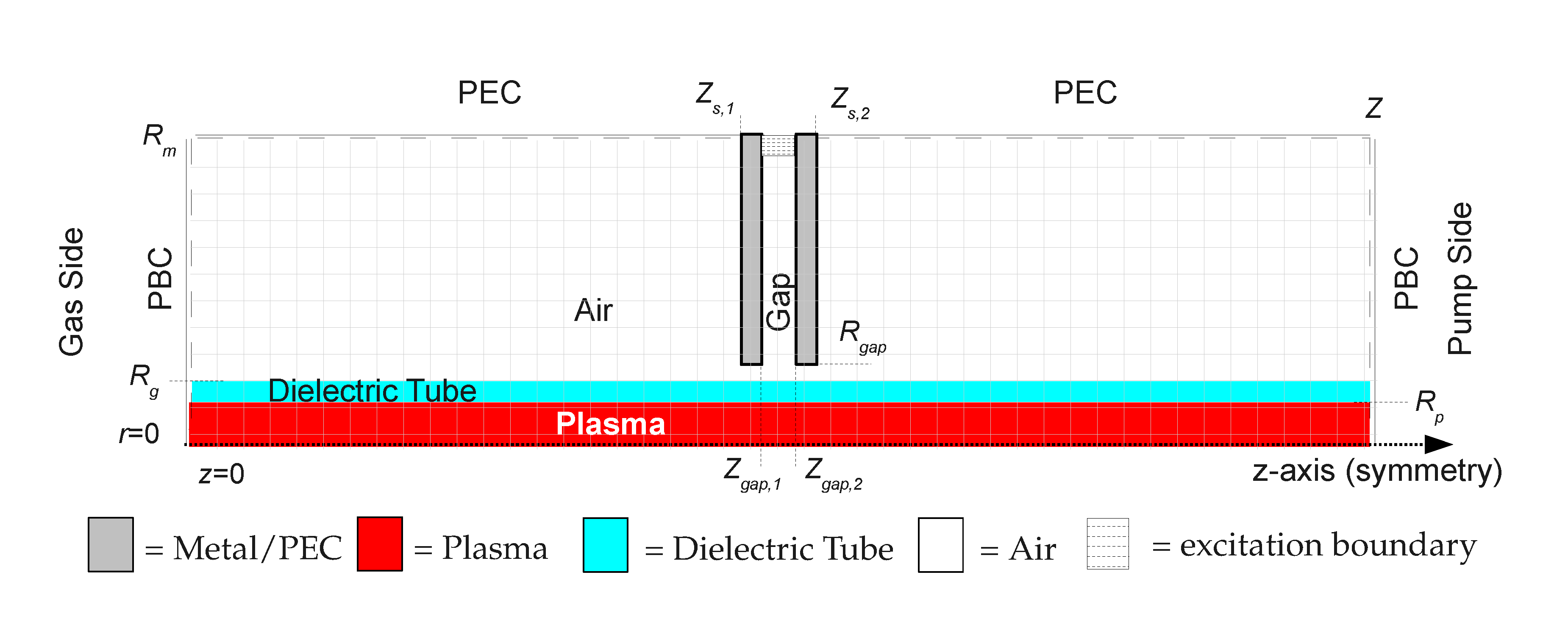
The model is solved in a two-dimensional axisymmetric cylindrical coordinate system centered on the axis of the discharge tube. The electromagnetic field is solved as a transverse magnetic (TM) mode with three coupled components.
Plasma Column Length vs. Absorbed Power
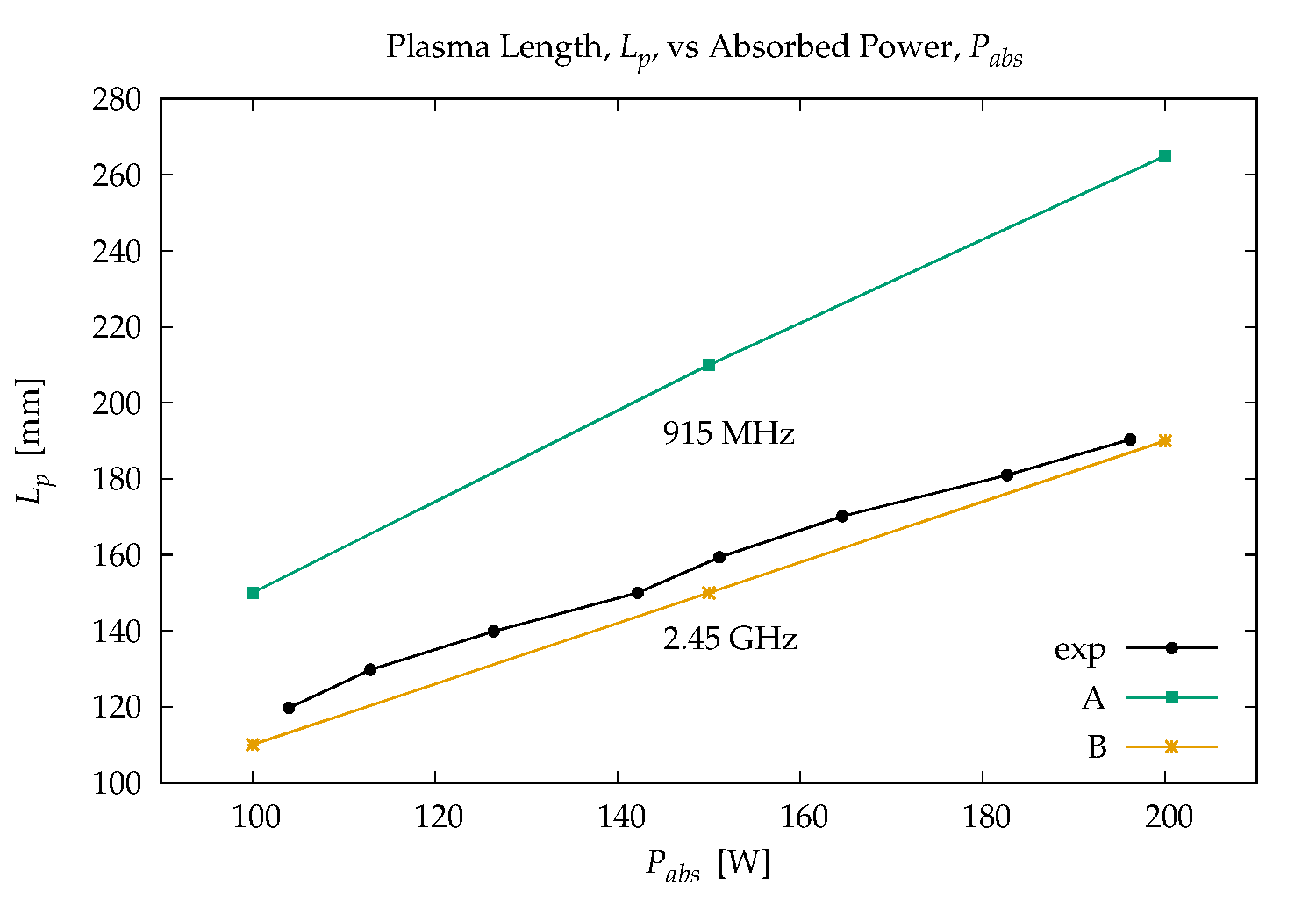
A key validation metric is comparing simulated plasma column lengths against experimental measurements across a range of absorbed powers. In the figure below, the plasma length ($L_p$) is plotted against the absorbed power ($P_{abs}$) for model variations alongside experimental data.
Influence of Wall Temperature and MAR
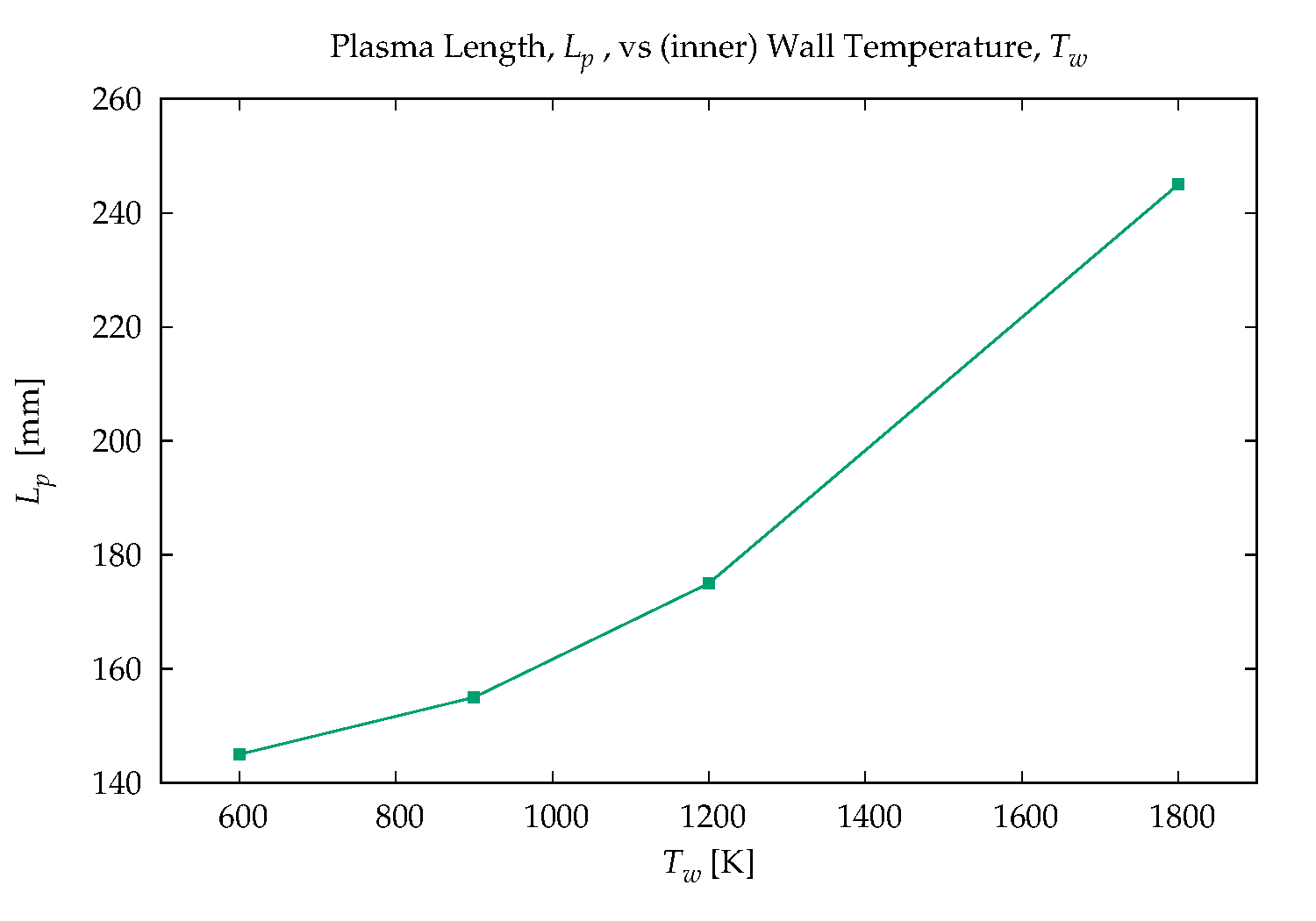
We investigated how the tube wall temperature ($T_w$) influences the discharge behavior. Wall temperature changes alter the heavy-particle gas temperature profile radially, which subsequently influences the molecular ion chemistry (MAR) and plasma constriction.
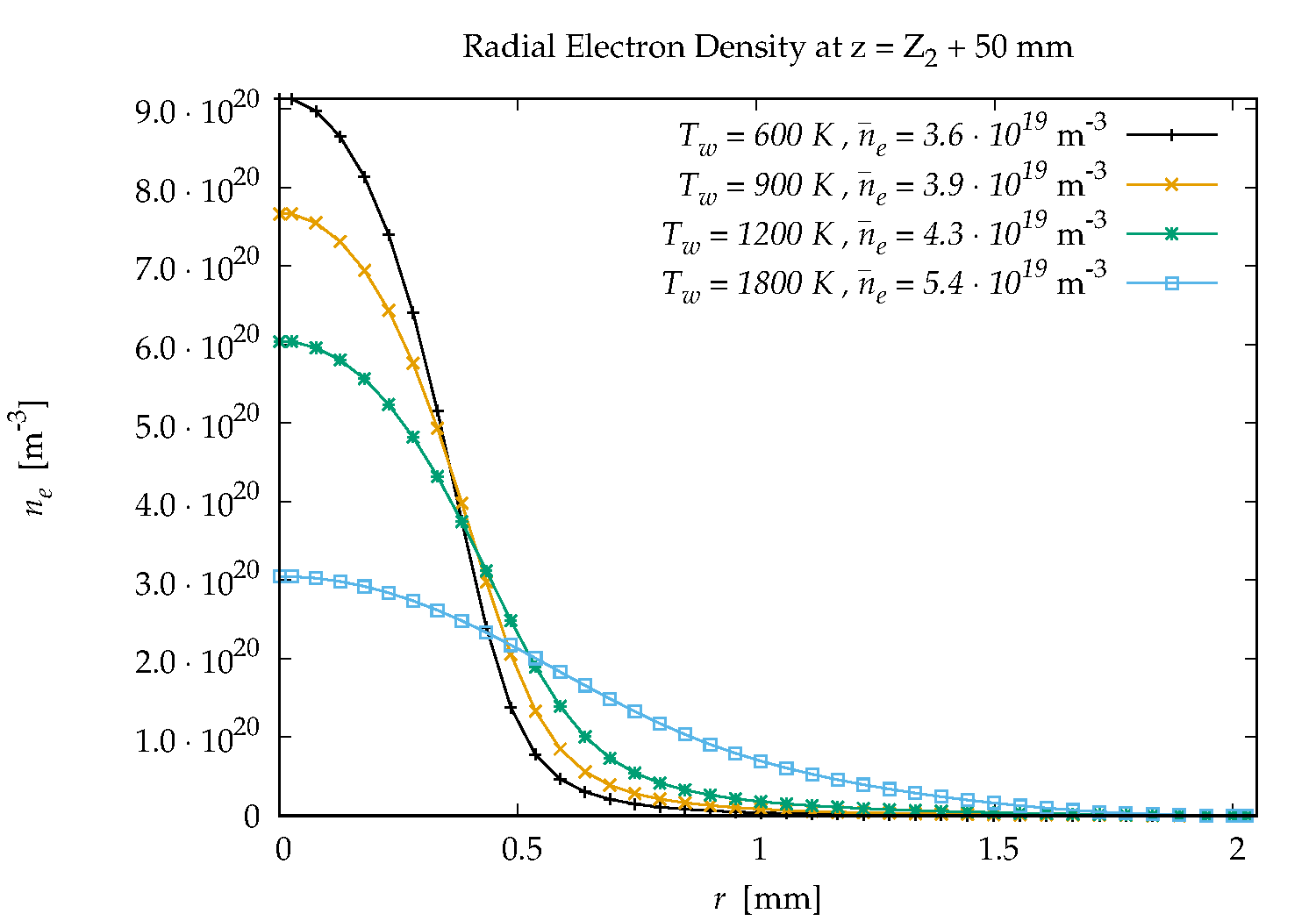
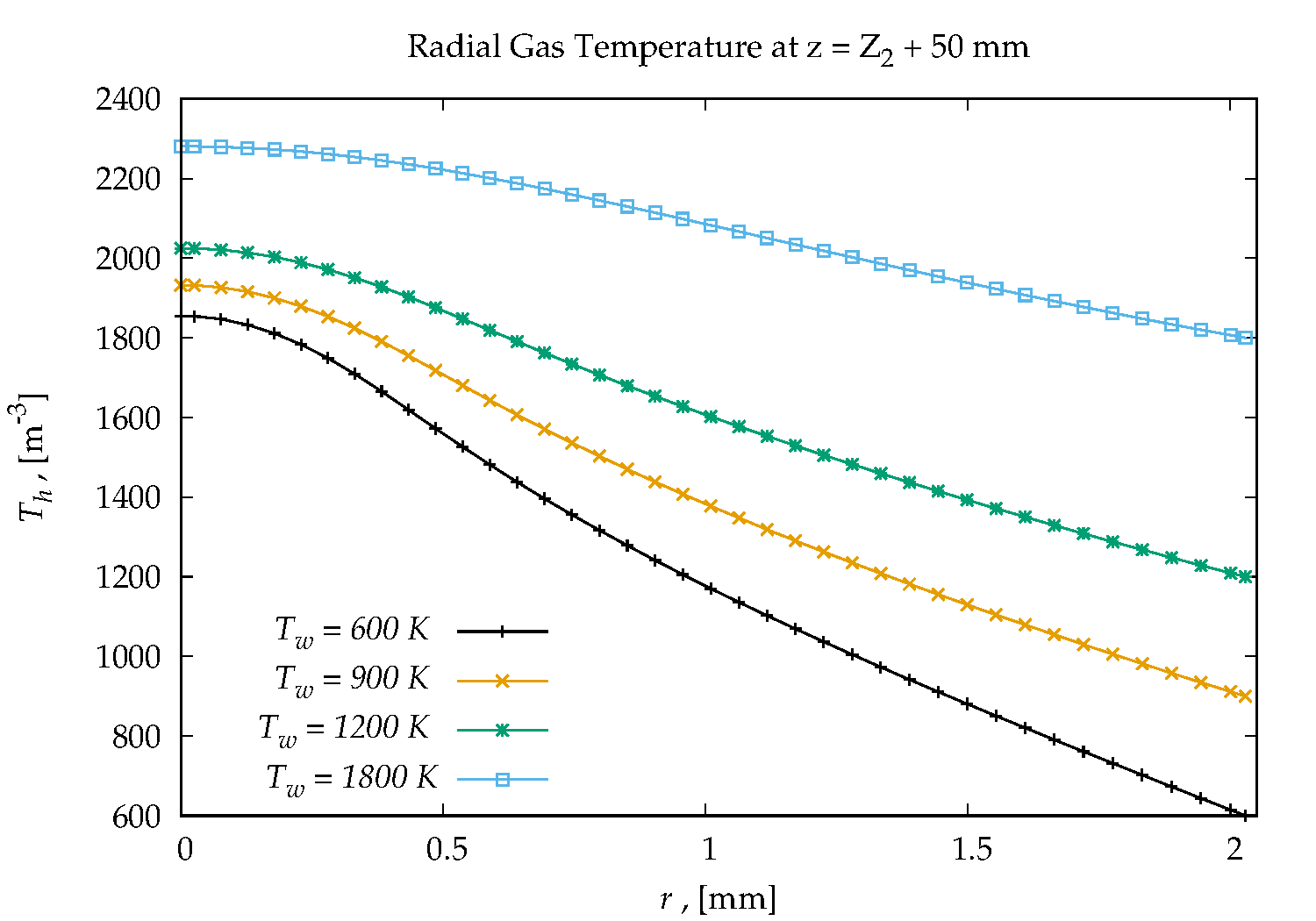
Radial Field and Density Characteristics
Solving the coupled equations allows us to map the radial electromagnetic field distribution inside the discharge tube and dielectric boundaries.
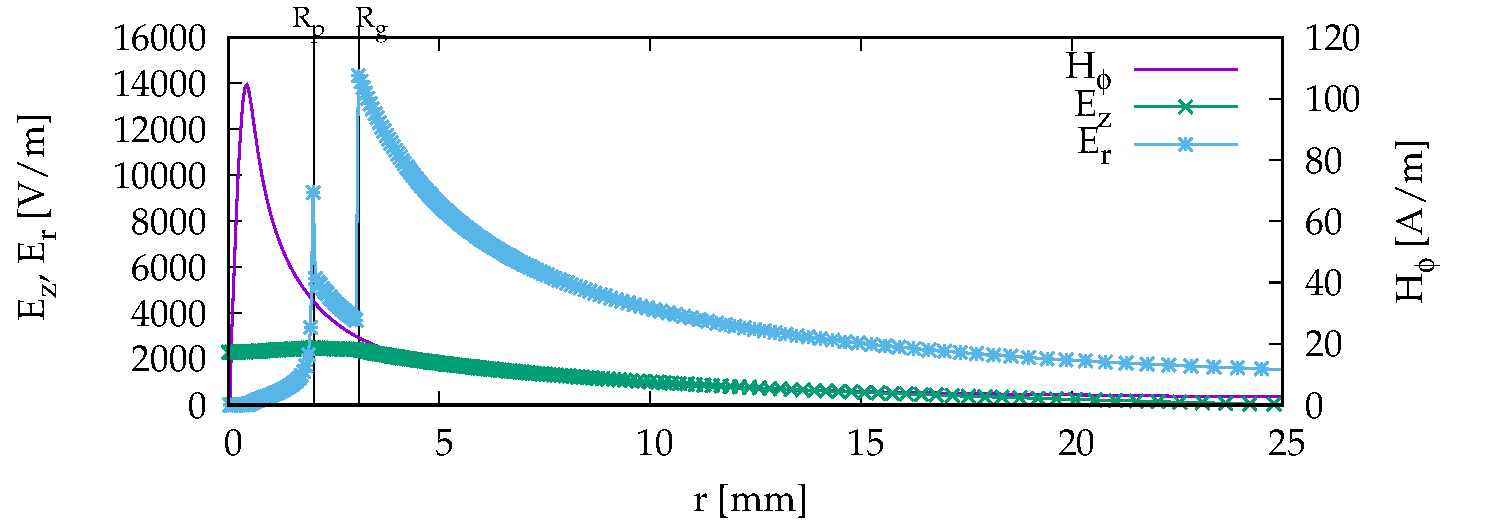
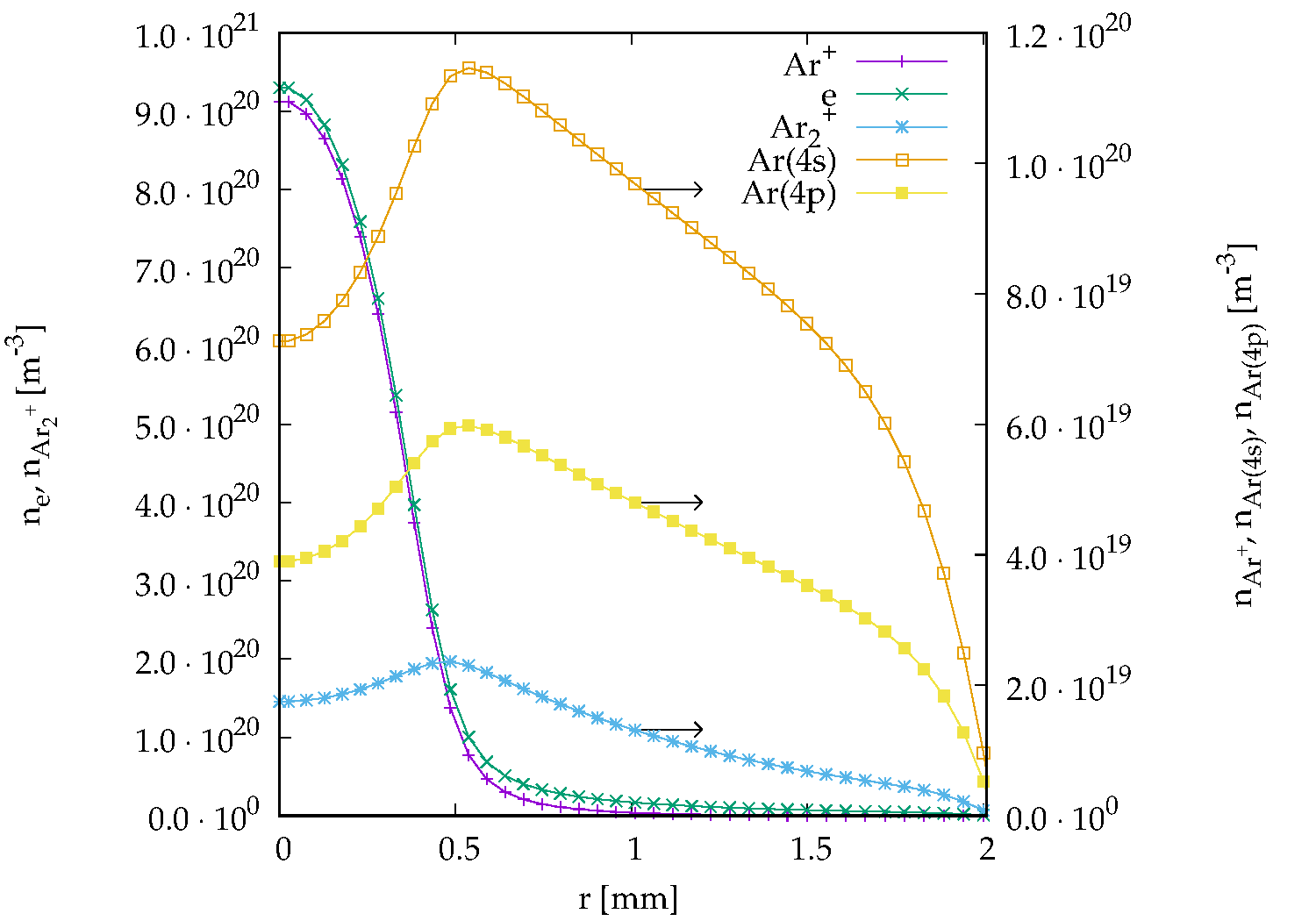
Bibliography
- Jimenez-Diaz M. (2011). Modelling of microwave induced plasmas: the interplay between electromagnetism, plasma chemistry and transport. PhD Thesis, Eindhoven University of Technology (TU/e). [ read thesis pdf ]